Syracuse Senior Advisor
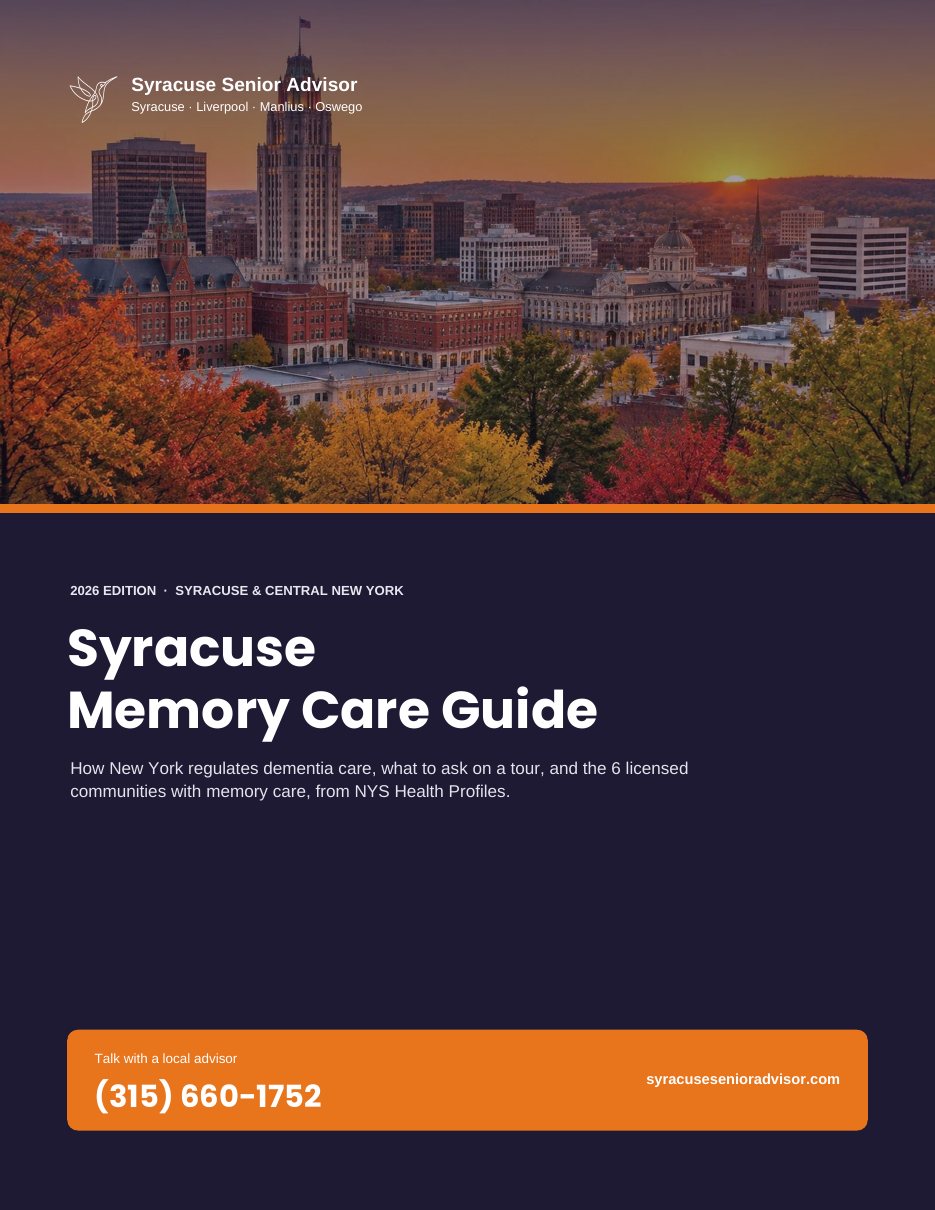
PDF (5 pages). Licensing data current to November 15, 2026.
What is in the Syracuse Memory Care Guide?
The guide walks through five things:
- A side-by-side comparison of assisted living and memory care.
- The New York rules for dementia care: staffing, training and secured units.
- 6 licensed communities in Onondaga, Oswego, Madison and Cayuga counties identified as offering memory care, with 204 secured beds.
- How memory care pricing compares with the New York assisted living median.
- A touring checklist built for dementia care, including what to watch for at the end of the day.
How is memory care different from assisted living in New York?
The difference is the setting and the staff: New York memory care adds a secured area and dementia-trained caregivers to ordinary assisted living.
| Assisted living | Memory care | |
|---|---|---|
| Who it serves | Adults who need help with daily tasks | Adults living with Alzheimer's disease or another dementia |
| Doors | Residents come and go | Secured to prevent unsafe wandering |
| Staff training | General caregiving | Added dementia training |
| Price | Base rate plus care level | Usually higher than assisted living |
How does New York regulate memory care?
New York does have a memory care standard: the Special Needs Assisted Living Residence. A residence around Syracuse may keep residents whose dementia needs a specialized setting only in SNALR beds, under a plan the Department of Health has approved for staffing, training, environment and activities. A sign that says memory care means nothing without that certification.
- Certification. Special Needs ALR beds under PHL Article 46-B and 10 NYCRR Part 1001, with an approved special needs plan.
- Without SNALR. A residence must arrange a move once a resident's dementia needs a specialized setting.
- Disclosure. ALRs must disclose services, fees and the conditions that would lead to a move, in writing.
- Inspection. SNALR units are inspected with the rest of the residence; reports post to NYS Health Profiles.
How many Onondaga, Oswego, Madison and Cayuga counties communities offer memory care?
Counting residences with SNALR beds in the NYSDOH Adult Care Facility quarterly capacity report, 6 licensed communities in Onondaga, Oswego, Madison and Cayuga counties offer memory care, with 204 secured beds between them.
The largest clusters are in Baldwinsville (2), Camillus (1), Jamesville (1) and Liverpool (1). 2 of them are small settings licensed for under 50 beds.
What does memory care cost in New York?
No memory care median is published for New York, so there is no honest Syracuse figure. SNALR beds generally cost more than the same residence's assisted living, which itself centers on a $7,110 statewide median.
How do I judge a memory care community in Syracuse on a tour?
Go at the end of the day, when the unit is at its busiest, and bring these questions:
- What dementia training do caregivers receive, and how often is it refreshed?
- What would make you ask a resident to move out?
- How many caregivers are on the unit overnight?
- How are medications given to residents who refuse them?
- How long have your memory care staff worked here?
Who stands up for a memory care resident around Syracuse?
The Long Term Care Ombudsman Program listed in Onondaga County's NY Connects guide, (315) 671-5108, advocates for residents of adult care facilities and nursing homes, joins care meetings when the resident agrees and helps with discharge disputes. Problems that break the rules go to the Department of Health at 1-866-893-6772, and the Alzheimer's Association helpline answers caregivers around the clock.
Would you rather talk it through?
Describe the diagnosis stage and the behaviors that worry you, and we will suggest settings that fit.
(315) 660-1752More free downloads
Who publishes this guide, and how is it paid for?
Syracuse Senior Advisor, a local senior care referral service, publishes the guide. It is free to families because communities pay us a referral fee when a family we referred moves in.
The lists follow the New York State Department of Health (NYSDOH) record, not our partner list, and no provider paid for placement. It is not medical, legal or financial advice; check current license status with the state.